

Veterans
Can a Veteran Buy a Home in Houston With Bad Credit?

This is one of the most common questions we hear from veteran buyers — and one of the most misunderstood.
The short version is yes, bad credit doesn’t automatically disqualify you from buying a home with a VA loan. But the full picture is more nuanced than that, and understanding it can mean the difference between buying sooner than you thought possible and spinning your wheels on the wrong plan.
The Move Live Love TX Team™ is a Houston, Texas real estate team based in The Woodlands. We help veteran buyers at every stage of the process — including the ones who aren’t quite ready yet but want to understand what it takes to get there.
Here’s the quick version
The VA doesn’t set a minimum credit score requirement. Individual lenders do. Most VA lenders in Houston look for a score in the 580 to 620 range as a starting point, though some will go lower depending on the full picture of your financial situation.
What makes the VA loan different from conventional financing isn’t just the score threshold — it’s how lenders are allowed to evaluate your overall creditworthiness. The VA underwriting process looks at more than a number. It considers your residual income, your payment history on specific types of accounts, the reasons behind past credit problems, and whether your financial situation has stabilized since then.
That context matters. A veteran who went through a rough patch three years ago but has been financially steady since is a different risk profile than someone in active financial difficulty — and a good VA lender knows how to make that case.
What the VA actually looks at
When a VA lender reviews a file with credit challenges, they’re looking at a few things beyond the score itself.
Residual income is one of the most important. This is the money left over each month after all your major expenses are paid — housing, debts, taxes, and insurance. The VA has specific residual income requirements based on family size and region. If your residual income is strong, it can offset credit concerns in a way that conventional underwriting typically doesn’t allow.
Payment history on housing is another. If you’ve been paying rent on time consistently, that history carries weight even if other parts of your credit report are less clean.
The nature and age of the credit problems also matters. A medical collection from five years ago is treated differently than a recent missed car payment. Lenders look at whether the issues were isolated or part of a broader pattern, and whether things have improved since.
For a deeper look at the specific scores and benchmarks VA lenders use in Houston, what credit score do veterans need to buy a home in Houston covers that in detail.
Common credit situations and what they mean for VA buyers
Bankruptcy A Chapter 7 bankruptcy typically requires a two-year waiting period from the discharge date before you can close on a VA loan. A Chapter 13 is different — you may be able to qualify after 12 months of on-time payments under the repayment plan, with court approval. The waiting period exists, but it’s shorter than what conventional financing requires.
Foreclosure A prior foreclosure — including a foreclosure on a previous VA loan — generally requires a two-year waiting period. If the foreclosure was on a VA loan, it may also affect your available entitlement until the VA’s loss is resolved. A VA-specialized lender can pull your Certificate of Eligibility and tell you exactly where you stand.
Collections and judgments Not all collections automatically disqualify you. Medical collections are treated differently than other types in VA underwriting. Outstanding judgments typically need to be addressed before closing, but the path forward depends on the specifics of your situation.
Late payments Recent late payments — especially on housing — raise more concern than older ones. A pattern of improvement over the past 12 to 24 months is one of the strongest things you can show a lender.
What you can do right now if your credit needs work
If your credit isn’t where it needs to be yet, the worst thing you can do is wait without a plan. Here’s where to start.
Pull your credit reports from all three bureaus and go through them carefully. Errors are more common than most people realize, and disputing inaccurate information is one of the fastest ways to see improvement.
Pay down revolving balances if you can. Credit utilization — how much of your available credit you’re using — has a significant impact on your score. Getting below 30 percent on each card makes a real difference.
Don’t open new credit accounts or make large purchases on credit while you’re preparing to buy. New inquiries and increased balances can move your score in the wrong direction right when you need it to hold steady.
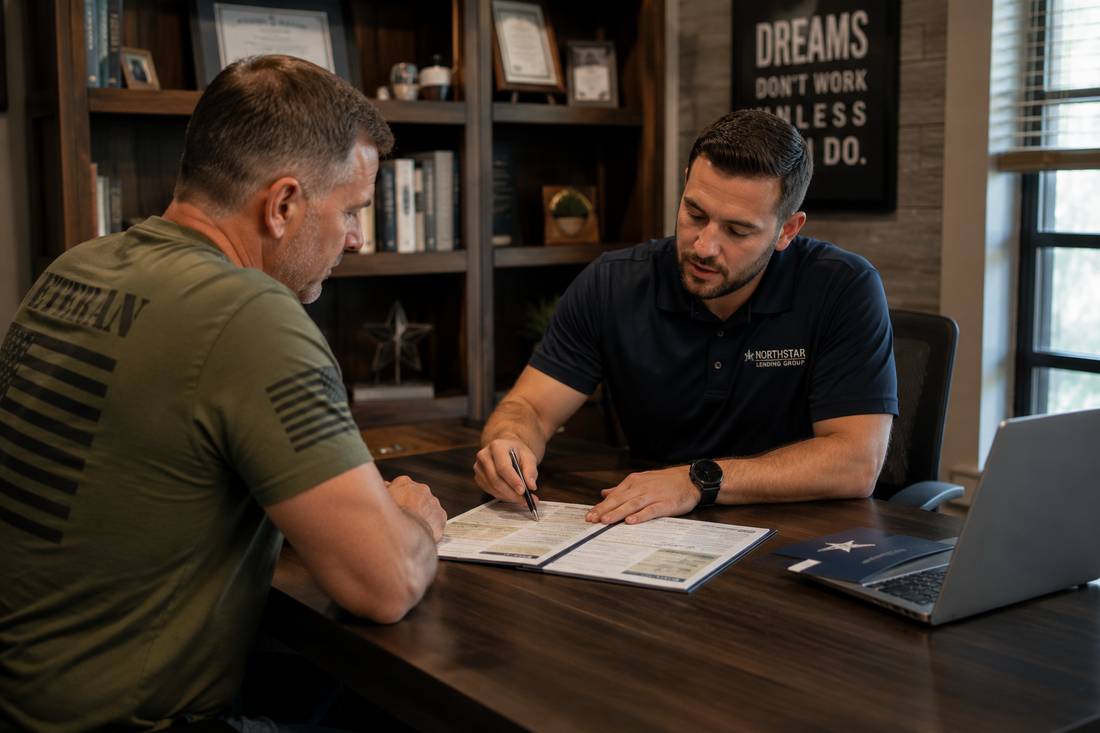
And connect with a VA-specialized lender sooner rather than later. Many will do a credit review at no cost and give you a specific roadmap — not just a number to hit, but the exact steps that will get you there in the shortest time.
What we would do
If a veteran buyer came to us with credit concerns, the first thing we’d do is connect them with a VA lender we trust — someone who’s worked with credit-challenged buyers before and knows how to evaluate the full picture, not just the score.
Then we’d help them understand exactly what needs to happen and in what order. Sometimes buyers are closer than they think. Sometimes there’s a 12-month plan that gets them where they need to be. Either way, knowing the real answer is better than guessing.
We’d rather spend time helping someone get ready than watch them give up on something they’ve earned the right to pursue.
Vicky Royster holds the Military Relocation Professional (MRP) designation, specialized training in helping military families and veterans navigate financing challenges like credit and residual income requirements.
The bottom line
Bad credit doesn’t mean no options. It means you need a lender who understands VA underwriting, a clear picture of where you stand, and a realistic plan for getting to the finish line.
A lot of veterans are closer to buying than they think. The key is finding out for sure rather than assuming the answer is no.
For a full overview of the VA home buying process in Houston, visit Everything a Veteran Needs to Buy a Home in Houston or download the VA Home Buying Guide.
Vicky Royster holds the Military Relocation Professional (MRP) designation, specialized training in helping military families and veterans navigate home buying and relocation.
Frequently Asked Questions
- Can a veteran buy a home in Houston with bad credit?
- Yes — bad credit doesn't automatically disqualify a VA loan applicant. The VA doesn't set a minimum credit score itself; individual lenders do, and most Houston VA lenders look for a score in the 580 to 620 range as a starting point.
- What does VA underwriting look at besides the credit score?
- Residual income, payment history on housing specifically, and the nature and age of past credit problems — a veteran who had trouble years ago but has been financially stable since is viewed differently than someone in active difficulty.
- How long after a bankruptcy can a veteran get a VA loan?
- A Chapter 7 bankruptcy typically requires a two-year waiting period from discharge, while a Chapter 13 may allow qualifying after 12 months of on-time payments under the repayment plan with court approval.
- How long after a foreclosure can a veteran qualify for a VA loan?
- Generally a two-year waiting period, and if the foreclosure was on a previous VA loan it may also affect the veteran's available entitlement until the VA's loss is resolved.
- What can a veteran do right now to improve their chances of qualifying?
- Pull credit reports from all three bureaus to dispute errors, pay down revolving balances below 30% utilization, avoid opening new credit or large purchases, and connect with a VA-specialized lender for a free credit review.