

Luxury
Why Many Houston Luxury Homes Are Underinsured, and How to Check Yours
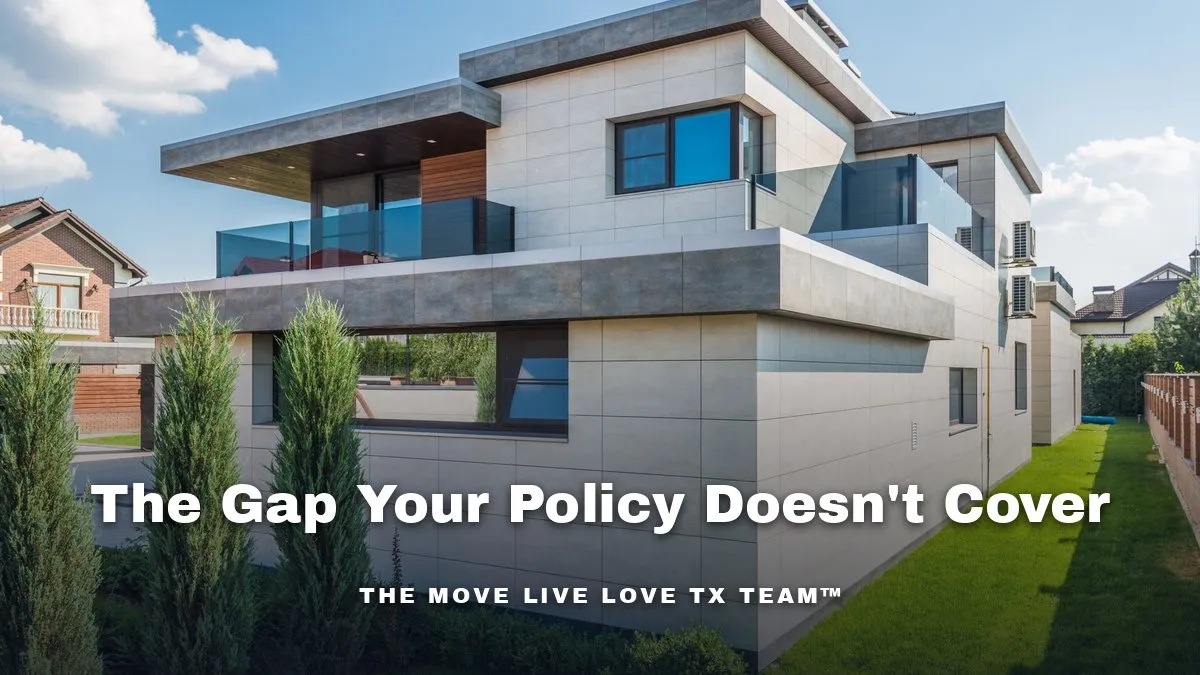
A homeowner who insures a $2 million Houston-area property based on its purchase price can discover after a total loss that rebuilding it costs $3.2 million or more. That gap between market value and true rebuild cost runs wider on luxury homes than on standard ones, because the things that make a luxury home worth what it’s worth (hand-finished plaster, curved steel window systems, imported stone cut to a custom pattern, millwork built for that house and no other) are exactly what a generic replacement-cost estimator tends to miss.
Two Different Numbers, Often Confused
Market value answers “what would this sell for,” and it includes the land. Rebuild cost answers “what would it take to reconstruct the structure from the ground up,” and it doesn’t include the land at all, since the lot presumably survives whatever happened to the house. A homeowner who sets their dwelling coverage off their purchase price or a recent appraisal is often insuring the wrong number entirely, and on a luxury property, that mistake compounds.
Rough national bands for 2026 run about $165 per square foot for basic tract construction, $230 for standard, $320 for custom, and $450 or higher for true luxury finishes, with West Coast and New England markets running 20-25% above that and post-disaster demand surges pushing regional costs 30-50% higher for a year or two after a major event. A policy written even three or four years ago at an older per-square-foot figure is likely behind where actual construction costs sit today.
Where the Real Gap Hides
Standard replacement-cost calculators are built around typical construction: drywall, standard trim, production-grade fixtures. They weren’t designed to price:
- Hand-applied plaster or specialty wall finishes
- Custom millwork and cabinetry built specifically for the home
- Imported stone, tile, or flooring cut to a non-standard pattern
- Architectural steel, custom window systems, or specialty roofing
- Wine rooms, home theaters, and other climate-controlled specialty spaces
Each of those adds real cost to rebuild and gets systematically underweighted by a generic estimator working off square footage alone. According to HUB International’s 2026 Private Client Outlook, 77% of high-net-worth respondents reported difficulty securing adequate property insurance, which tracks with what we see: the properties hardest to insure correctly are exactly the ones with the most non-standard finishes to account for.
What to Check
Ask your insurance agent directly whether your dwelling coverage came from a real replacement-cost estimate built around your home’s specific materials, or whether it was set off your purchase price, a bank appraisal, or a generic per-square-foot formula. Those are different processes with different accuracy, and a lot of policies were written the easy way. If it’s been more than two or three years since that number was checked, ask for a fresh estimate, especially if you’ve done any renovation since.
Why This Matters More If You Paid Cash
A lender requires a minimum dwelling coverage tied to the loan amount, which at least creates a floor for a financed purchase. A cash buyer has no outside check on that number at all. We’ve walked luxury buyers through this exact conversation after closing on an all-cash purchase, because nobody else in the transaction was positioned to flag it. Peter’s background in construction means he can look at a home’s actual finish level and tell a client fairly quickly whether their stated coverage sounds anywhere close to right, which is a conversation most agents never have with a client after the sale closes.
If you’re weighing insurance exposure alongside other risk on a coastal or near-water property, we’ve also written about how Texas Windstorm Insurance leaves gaps on luxury homes near the water, and if you’re earlier in a purchase decision, our Navigating Luxury Real Estate guide covers the broader picture beyond insurance.
Frequently Asked Questions
- What does it mean for a luxury home to be underinsured?
- It means the dwelling coverage limit on the policy is lower than what it would cost to rebuild the home today, so after a total loss, the payout falls short of what's needed to reconstruct it, sometimes by hundreds of thousands of dollars.
- Why doesn't market value tell me what my home costs to rebuild?
- Market value includes the land and reflects what a buyer would pay today, while rebuild cost is purely construction: labor, materials, and the custom finishes specific to your home. On a luxury property, custom finishes can cost far more to replicate than a standard estimator assumes.
- How much does luxury construction cost per square foot in 2026?
- Rough 2026 national bands run about $320 per square foot for custom construction and $450 or more for true luxury-tier finishes, with regional and material-driven swings on top of that. A policy written years ago at a lower per-square-foot number is likely stale.
- What should I ask my insurance agent to check on my policy?
- Ask specifically whether the dwelling coverage was set from an appraisal or purchase price versus a real replacement-cost estimate that accounts for your home's specific materials and craftsmanship, and ask when that estimate was last updated.
- Does this affect homes bought with cash the same way as financed homes?
- Yes, and in some ways it matters more. A lender requires a minimum coverage tied to the loan amount, which at least sets a floor. A cash buyer sets their own coverage with no outside check, so it's entirely on the owner to make sure the number is real.