

Divorce
Should You Sell the House During a Divorce When You Have Kids in Texas?

Having kids doesn’t change the legal rules for selling a house in a Texas divorce: community property law still applies, both spouses generally need to agree to a sale, and the equity still gets divided. What kids change is the timing and how you handle the process, because to them the house is also their school, their friends and their routine.
It’s one of the most emotionally layered situations we see, and it deserves a real answer, not a legal checklist or a generic timeline. When kids are in the picture, the house stops being just a financial asset and becomes something tied to their sense of stability, their school, their friendships, and their daily routine. That doesn’t mean you can’t make smart decisions about it. It just means those decisions carry more weight, and they deserve more thought.
The Move Live Love TX Team™ is a Houston, Texas real estate team based in The Woodlands that helps homeowners navigate life transitions like divorce while guiding them to selling smarter across Houston and surrounding areas. Both Peter and Vicky have lived through divorce personally, and they understand that when children are involved, the stakes feel different — because they are.
Here’s what you need to know.
Here’s Where Things Stand
In most cases, having children doesn’t change the legal framework around selling a home during a divorce — Texas community property law still applies, both spouses still generally need to sign off on a sale, and the equity still needs to be divided. But kids change everything about the emotional and logistical reality of the process, and those practical considerations have a real impact on timing, decisions, and what each path actually looks like.
The full picture depends on your situation, your children’s ages, the custody arrangement, and where things stand in your divorce.
Why the House Feels Different When Kids Are Involved
Most divorcing parents already know this instinctively, but it’s worth saying out loud: children experience the family home differently than adults do. For them, it’s not an asset or a liability. It’s the place they know. It’s their bedroom, their backyard, their neighborhood, the walk to the bus stop. When that changes, it registers as loss — even if the adults in the situation know the change is necessary and ultimately good.
That emotional reality doesn’t mean you shouldn’t sell the house. In a lot of cases, selling is the right financial decision regardless of how the kids feel about it. But it does mean the process needs to be handled with more intentionality than a standard sale — because how you handle it, and how you communicate it, matters to your children as much as the outcome does.
It also means that decisions made reactively — rushing the sale out of anger, digging into a position out of spite, letting the home sit in limbo for a year while the divorce drags on — don’t just cost money. They cost your kids stability, and that’s a price that doesn’t show up on a closing statement but is very real.
The School District Question
In Houston and the surrounding suburbs, school district is one of the most significant factors in where families choose to live — and it becomes a central conversation in almost every divorce with kids that we’re involved in. Whether you’re in Katy ISD, Klein ISD, Clear Creek ISD, Conroe ISD, or any of the other strong districts in the greater Houston area, the question of which parent stays in the district — and whether that’s financially realistic — shapes what happens with the house.
Here’s what we see happen most often: one parent feels strongly about keeping the kids in their current school and uses that as the primary reason to stay in the home. That’s an understandable impulse, and school continuity genuinely does matter. But it needs to be weighed honestly against whether the staying parent can actually afford to carry that home on a single income — mortgage, taxes, HOA, maintenance, all of it. A home that creates ongoing financial stress is not a stable environment for kids, even if it’s the same four walls they grew up in. Check out our article on what happens if you can’t afford the house after a divorce in Texas
Staying in the school district doesn’t always mean staying in the current house. In many Houston-area districts, there are rental options, smaller homes, and other paths that keep kids in the same school without overextending one parent financially. It’s worth exploring the full range of options before locking into a position.
Timing the Sale Around Your Children
One of the most common questions we get from parents is whether they should wait until the school year is over to sell. The honest answer is that it depends — and it’s a legitimate factor to consider, but it shouldn’t be the only one.
Selling in the spring or summer does have practical advantages when kids are involved. It minimizes mid-year school disruption, gives everyone more time to settle into new living situations before school starts again, and tends to align well with strong Houston-area selling seasons when buyer demand is active. If you have a choice in timing and the finances allow for it, waiting for a natural school break to complete a sale can reduce the disruption children feel. We can help map it out for you in what to expect when selling a house during divorce in Texas.
But timing is a tool, not a trump card. If the financial situation requires action sooner — if the mortgage is strained, if both parties need the equity to move forward, if waiting is creating ongoing conflict that the kids are exposed to — then protecting their stability may mean moving forward even mid-school year. Schools handle transfers all the time, and a stable, low-conflict transition is often better for children than a prolonged, high-tension waiting period in a home where the emotional environment is difficult.
Showings When Kids Are Still in the Home
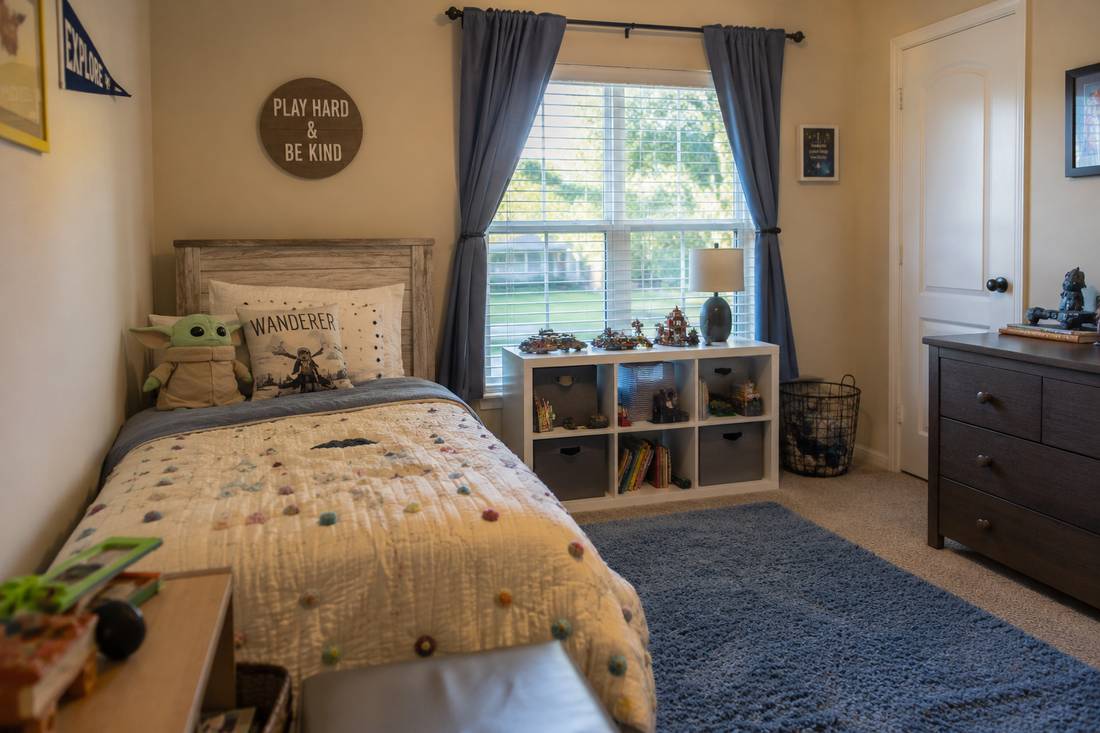
If one spouse and the children are still living in the home during the sale, showings require some additional thought. Kids don’t always understand why strangers are walking through their bedroom, and the process can feel disruptive or unsettling if it’s not handled thoughtfully.
A few things that help: keeping a consistent showing schedule when possible so kids know what to expect, having a plan for where they’ll be during showings so the home can be shown without disruption, and making sure their personal spaces — their rooms, their things — are treated with care and presented respectfully. None of this is complicated, but it requires intention, and it’s part of what a good agent handles as a matter of course in a divorce sale with children present.
Download Our Houston Divorce Home Selling Guide
If you’re trying to get your bearings on what this whole process looks like — financially and practically — our guide walks through it in plain language.
Download the Houston Divorce Home Selling Guide here.
Your Three Paths — What Each One Looks Like With Kids in the Picture
Selling the home together is often the cleanest financial outcome, and when it’s handled well, it can also provide the most clarity for children — a defined timeline, a known end date, and both parents moving forward together on a plan. The key is keeping the sale process as low-conflict as possible, because kids absorb more of the tension between parents than most adults realize.
One spouse buying out the other and staying in the home can provide genuine continuity for children staying in the same school, same neighborhood, and same bedroom. But it only works if the staying parent can truly carry the financial weight of that home on their own. A buyout that stretches one parent to the financial breaking point doesn’t serve the kids in the long run, even if it feels like the most protective choice in the short term. We can walk through this together in can you refinance a house during a divorce in Texas.
Holding off on a decision is sometimes the right call — particularly mid-school-year or when the divorce process itself is still in early stages. But it’s only workable if both parties can maintain a clear, written agreement about who covers what in the meantime, and if the home environment during that holding period is functional rather than a source of ongoing conflict. Kids living in a home where the tension is constant and unresolved are not being protected by the delay — they’re just being exposed to it longer.
The Biggest Mistake We See
The biggest mistake divorcing parents make is using the children as the justification for a position that’s really about something else. Refusing to sell because of the kids when the real reason is resistance to the divorce. Insisting on keeping the home because of the kids when the real reason is financial anxiety about starting over. Delaying the process because of the kids when the real reason is conflict avoidance. Kids are not a strategy. When their wellbeing genuinely drives the decision, that’s appropriate and important. When their names are being used to win an argument, it usually makes the process longer, more expensive, and harder on everyone — including them.
What We Would Do
If we were sitting across the table from a family in this situation, the first thing we’d want to understand is what the kids actually need — not as an abstract concept, but practically. What are their ages? What school are they in? What does the custody arrangement look like? What does each parent’s financial picture look like going forward?
From there we’d walk through each path honestly — what selling looks like, what a buyout would require, what waiting would actually mean for everyone — so the decisions get made with a full picture rather than in reaction to emotion. The goal is a process that’s as low-conflict as possible, a sale that protects the financial position of both parties, and an outcome that gives the kids the clearest possible path to stability on the other side.
We’re Here When You’re Ready
If you’re trying to figure out what to do with your home while also trying to protect your kids through this process, the most important first step is getting a clear picture of your options — not just emotionally, but financially and practically.
The Move Live Love TX Team™ helps families across Houston and surrounding areas navigate this exact situation. We’ve been through divorce ourselves, we understand what’s at stake when kids are involved, and we know how to help you move through this with as much clarity and as little chaos as possible.
Download our Houston Divorce Home Selling Guide to get oriented on the full process, or reach out directly and we’ll have a real conversation about your situation.
Frequently Asked Questions
- Does having kids change the legal process of selling a house during a Texas divorce?
- No — Texas community property law still applies and both spouses generally need to sign off on a sale, but kids change the emotional and logistical reality of timing and communication.
- Should you wait until the school year ends to sell during a divorce?
- It depends — waiting for a natural school break reduces disruption if finances allow it, but timing is a tool, not a trump card, and ongoing conflict or financial strain may mean moving forward sooner.
- What are the three main paths for the house when kids are involved?
- Selling the home together for a clean, defined timeline; one spouse buying out the other to stay in the same school and neighborhood; or holding off on a decision if both parties can maintain a clear written agreement.
- How should showings be handled when kids still live in the home?
- With a consistent schedule so kids know what to expect, a plan for where they'll be during showings, and their personal spaces treated with care and presented respectfully.
- What's the biggest mistake divorcing parents make regarding the house?
- Using the children as the justification for a position that's really about something else, like resistance to the divorce or financial anxiety, rather than what the kids actually need.