

Veterans
What Happens After You Close on a VA Loan in Houston
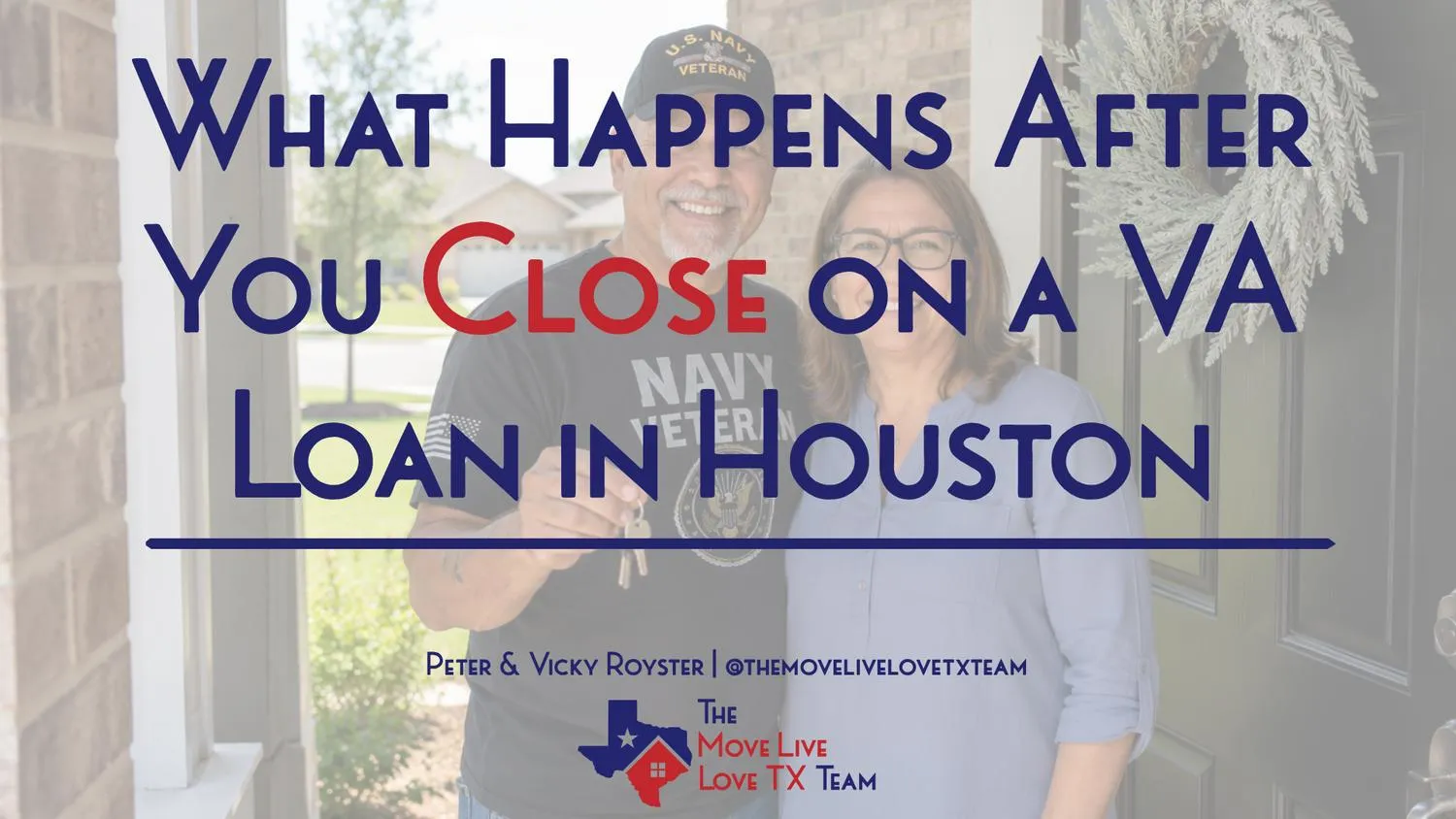
Most articles about VA loans stop at closing.
You get the keys, the article ends, and you’re left figuring out the rest on your own.
The thing is, closing isn’t where your VA benefits stop. For a lot of veterans, it’s actually where some of the most valuable advantages begin. And most people don’t find out about them until years later — or not at all.
This article covers what comes next.
The Move Live Love TX Team™ is a Houston, Texas real estate team based in The Woodlands. We help veteran buyers navigate the home buying process from pre-approval through closing and beyond, across Houston, Spring, Cypress, Katy, Conroe, and The Woodlands.
Here’s where we start
The day you close, you’ve done the hard part. But there are four things worth understanding right away — because each one has real financial value and a window where acting sooner is smarter than waiting.
Texas property tax exemptions for veterans
This is the one that surprises people the most.
Texas offers some of the most generous property tax exemptions in the country for qualifying disabled veterans. Depending on your VA disability rating, you may be eligible for a partial or full exemption on your property taxes.
Here’s how it breaks down for 2024:
A rating of 10 to 29 percent qualifies for a $5,000 exemption on the home’s appraised value. That number increases with your rating — 30 to 49 percent gets $7,500, 50 to 69 percent gets $10,000, and 70 percent or higher gets $12,000. Veterans with a 100 percent disability rating or those who are considered unemployable may qualify for a full exemption, which means no property taxes on their primary residence.
Surviving spouses of veterans who died in service or from a service-connected disability may also qualify.
This is not automatic. You have to apply through your county appraisal district. In Harris County that’s the Harris County Appraisal District, or HCAD. In Montgomery County it’s MCAD. The application process is straightforward but it does have deadlines, so the sooner you look into it after closing the better.
If you’re buying in The Woodlands, Spring, Conroe, or anywhere in the surrounding suburbs, check with the appraisal district for your specific county. The exemption amounts are the same statewide but the application process runs through each county separately.
The VA IRRRL — your streamlined refinance option
IRRRL stands for Interest Rate Reduction Refinance Loan. It’s also called the VA Streamline Refinance, and it exists specifically for veterans who already have a VA loan and want to refinance into a lower rate.
What makes it different from a conventional refinance is how simple it is. In most cases there’s no appraisal required, less paperwork than a standard refinance, and lower costs overall. You don’t have to re-prove your income or go through a full underwriting process the way you would with a traditional refinance.
The catch is that it has to result in a lower interest rate or move you from an adjustable rate to a fixed rate. You can’t use it to pull cash out.
If rates drop significantly after you close — and in Houston’s market, that’s happened more than once over the past decade — the IRRRL is worth knowing about. It’s one of the faster, lower-cost ways to take advantage of a rate improvement when it comes.

Loan assumability — the sleeper advantage
This one doesn’t come up often enough.
When you eventually sell your Houston home, a buyer may be able to assume your VA loan — meaning they take over your existing loan at your original interest rate rather than getting a new one at whatever rates look like at the time.
In a high-rate environment, that’s a significant selling advantage. A buyer who can assume a 3 or 4 percent VA loan instead of getting a new loan at 7 percent is saving real money every month. That makes your home more attractive and potentially more valuable compared to similar properties that don’t carry that option.
VA loans are one of the few loan types that are still assumable. The buyer doesn’t have to be a veteran to assume the loan, though they do have to qualify with the lender. And if a non-veteran assumes your loan, your VA entitlement stays tied up until the loan is paid off — something worth understanding before you agree to it.
It’s worth mentioning this to your agent when you’re eventually ready to sell. In the right market conditions, it becomes a real negotiating tool. For more on how VA loan advantages connect to your overall buying and selling strategy, the VA Home Buying Guidecovers this in more detail.
Reusing your VA entitlement
A lot of veterans assume their VA benefit is a one-time thing. It isn’t.
Once you sell your home and pay off your VA loan, your full entitlement is restored. You can use it again on your next purchase — same benefits, same terms, same no-down-payment advantage if you qualify.
You can also have two VA loans at the same time under certain circumstances. If you’re relocating and haven’t sold your first home yet, or if you’re buying a second property in a different area, remaining entitlement may still allow you to use the benefit again without fully paying off the first loan first.
We covered the full picture on this in VA loan limits and entitlement explained for Houston buyers if you want to go deeper on how entitlement works.
What we would do
If we just helped a veteran close on a home in Houston, the first thing we’d tell them after handing over the keys is to look into the property tax exemption right away. It’s the most immediate financial win available and the one most people miss simply because nobody told them about it.
After that, we’d make sure they had our contact information saved — not just for real estate questions down the road, but for contractor referrals, market updates, and anything else that comes up as a homeowner. Closing isn’t the end of the relationship for us. It’s the beginning of a different kind of one.
And if rates ever shift to a point where the IRRRL makes sense, we’d rather our clients hear about it from us first than figure it out on their own two years later.
Vicky Royster holds the Military Relocation Professional (MRP) designation, specialized training in helping veterans make the most of every benefit available to them, before and after closing.
One more thing worth saying
We support the Tunnel to Towers Foundation every month. And when we close with a veteran buyer, we make an additional donation in their honor.
Service matters. It’s that simple.
If you’re a veteran who just closed or is getting ready to buy in Houston, we’re here for both parts of that journey. Start with our full resource library at Everything a Veteran Needs to Buy a Home in Houston, or download the VA Home Buying Guide to get the complete picture before you start.
Vicky Royster holds the Military Relocation Professional (MRP) designation, specialized training in helping military families and veterans navigate home buying and relocation.
Frequently Asked Questions
- What VA benefits continue after closing on a home in Houston?
- Texas property tax exemptions for disabled veterans, the VA IRRRL streamline refinance, loan assumability, and the ability to reuse VA entitlement on future purchases.
- How much can the Texas property tax exemption save a disabled veteran?
- It scales with disability rating, from $5,000 off appraised value at 10-29 percent up to a full exemption (no property taxes) for a 100 percent rating or unemployable status.
- What is the VA IRRRL?
- A streamlined refinance for veterans who already have a VA loan and want a lower rate, with no appraisal required in most cases and less paperwork than a standard refinance.
- Can a VA loan be assumed by a future buyer?
- Yes — VA loans are one of the few assumable loan types, letting a buyer take over the seller's original rate, which becomes a real selling advantage in a high-rate environment.
- Does using a VA loan once use up the benefit forever?
- No — once the home is sold and the loan paid off, full entitlement is restored, and veterans can even hold two VA loans at once under certain circumstances.