

Market
How to Avoid Wire Fraud When You Close on a Texas Home
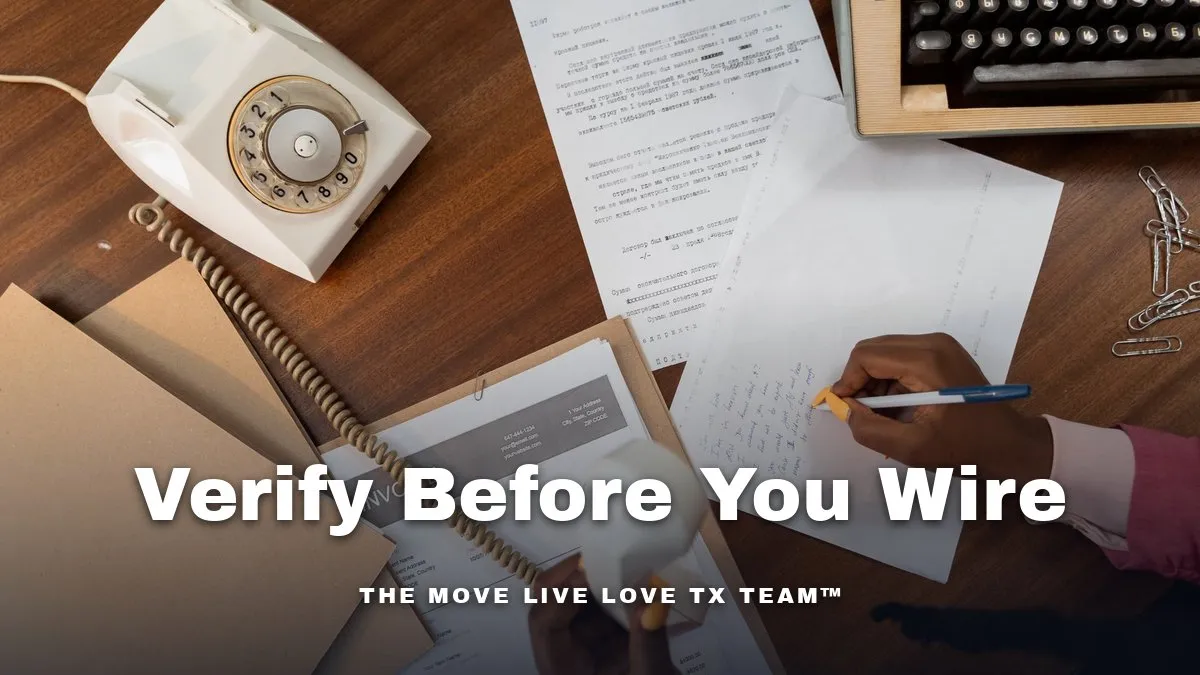
Wire fraud at a Texas home closing usually starts the same way: a criminal has been quietly watching the email thread for weeks, waiting for the moment closing funds are about to move, then sends a message that looks exactly like it came from your title company, with a matching signature block and a phone number that rings straight to them instead of the real office. The buyer wires the money. It’s gone within minutes, and recovery odds drop fast after that.
How the Scam Works
Real estate transactions are an unusually good target for this kind of fraud because everyone involved, the buyer, the seller, the lender, the title company, and both agents, is emailing back and forth for weeks about a large sum of money with a hard deadline attached. Criminals compromise one email account somewhere in that chain, often the weakest link rather than the most obvious one, and read enough of the thread to know exactly when to strike. The fake email that follows can be genuinely convincing: correct names, a plausible signature block, and language that mirrors how the real people in the deal write.
The version that catches people off guard isn’t a poorly-written scam email full of typos. It’s one that looks entirely normal, arrives at exactly the right moment in the transaction, and asks you to wire funds to an account that’s one character off from the real one, or plainly different, banking on the fact that nobody double-checks eighteen digits under closing-day pressure.
The One Rule That Stops It
There is exactly one habit that defeats almost every version of this scam: verify wire instructions by phone, using a number you already had on file or looked up independently, never a number that appears in the email containing the instructions. If a criminal has compromised the email thread, the phone number in that email is theirs too. Calling it doesn’t verify anything. It confirms the scam.
- Call the title company using a number from an earlier, trusted source, your closing packet, the title company’s own website you type in directly, or a business card, not a link or number in the suspicious email
- Read the account and routing numbers back out loud and have the person on the other end confirm them verbally before you send anything
- Treat any last-minute change to wiring instructions as a red flag, since a legitimate title company rarely changes account details close to closing without prior notice
- Remember that only the title company communicates wiring instructions, never your lender and never your real estate agent, so an instruction arriving from either of those sources is itself worth questioning
If You Think You’ve Already Sent It
Speed is everything once money has moved. Call your bank immediately and request a wire recall, before you do anything else, including calling the title company. Every hour that passes lowers the odds of getting the funds back. After the bank, notify your title company so they can flag the account on their end, and file a report with the FBI’s Internet Crime Complaint Center at ic3.gov, which has a dedicated recovery team that works specifically on intercepting fraudulent wires before they clear through the destination bank. None of this guarantees recovery, but a fast report gives you a real shot instead of none.
Why We Walk Every Client Through This
We tell every buyer, every single time, before their closing date is even set: nobody will ever change your wiring instructions by email alone, and if anything about a wire request feels off, call us before you send a dollar. This isn’t boilerplate we add to keep a lawyer happy. We’ve watched too many closings across two decades in this business to treat it as anything other than a real risk that deserves a real conversation, not a line item buried in a stack of closing disclosures nobody reads in full.
The Move Live Love TX Team is a husband-and-wife real estate team serving Houston and the surrounding areas, helping people make the move that comes next. Part of making that move safely is making sure the biggest wire transfer most people will ever send in their life goes to the right account, and that’s a conversation we have directly, not only in the fine print.
If you’re deep enough into a purchase that wiring instructions are coming soon, our coverage of what happens to your earnest money if a Texas home sale falls through and how long a Texas option period should run covers two other places in the timeline where a little extra caution protects real money.
One Phone Call, Every Time
The Move Live Love TX Team is a husband-and-wife real estate team serving Houston and the surrounding areas, helping people make the move that comes next. If a wiring instruction ever lands in your inbox and something about it feels slightly off, that hesitation is worth trusting. Pick up the phone, call a number you already know is real, and confirm before you send. The Move Live Love TX Team is a husband-and-wife real estate team serving Houston and the surrounding areas, helping people make the move that comes next. We would rather field a hundred unnecessary verification calls than watch one client lose a down payment to a scam that a single phone call would have stopped.
Frequently Asked Questions
- How does wire fraud happen at a Texas real estate closing?
- Criminals monitor a transaction, often by hacking an email account tied to the deal, then send the buyer fake wiring instructions that look like they came from the title company, lender, or agent, using a matching signature block and a phone number the criminal answers. The buyer wires closing funds straight to the criminal's account, and once it's sent, it's usually gone.
- How do I safely verify wire instructions before closing?
- Call the title company using a phone number you already had or looked up independently, never a number listed in the email containing the wire instructions, and confirm the account details out loud before you send a dollar. This single step stops the overwhelming majority of real estate wire fraud attempts.
- What are the warning signs of wire fraud in a real estate transaction?
- Watch for a last-minute change to wiring instructions, an email creating urgency to send funds immediately, a slightly misspelled email address, or contact from someone you weren't expecting to hear from. Any one of these on its own is worth a phone call to verify.
- What should I do if I think I sent money to a wire fraud scam?
- Contact your bank immediately and request a wire recall, then notify your title company and file a report with the FBI's Internet Crime Complaint Center at ic3.gov. Speed matters more than anything else here, since a recall requested within hours has a real chance of succeeding where one requested days later usually doesn't.
- Will my title company ever change wiring instructions by email?
- No legitimate title company changes wiring instructions by email alone, especially not at the last minute. Only the title company communicates wiring instructions in a real transaction, never the lender or your real estate agent, and any instruction that arrives differently is worth treating as suspicious until you've verified it by phone.